March 2026 Update: How CollegeEssay.org's AI-Proof Writing Passes Turnitin + GPTZero
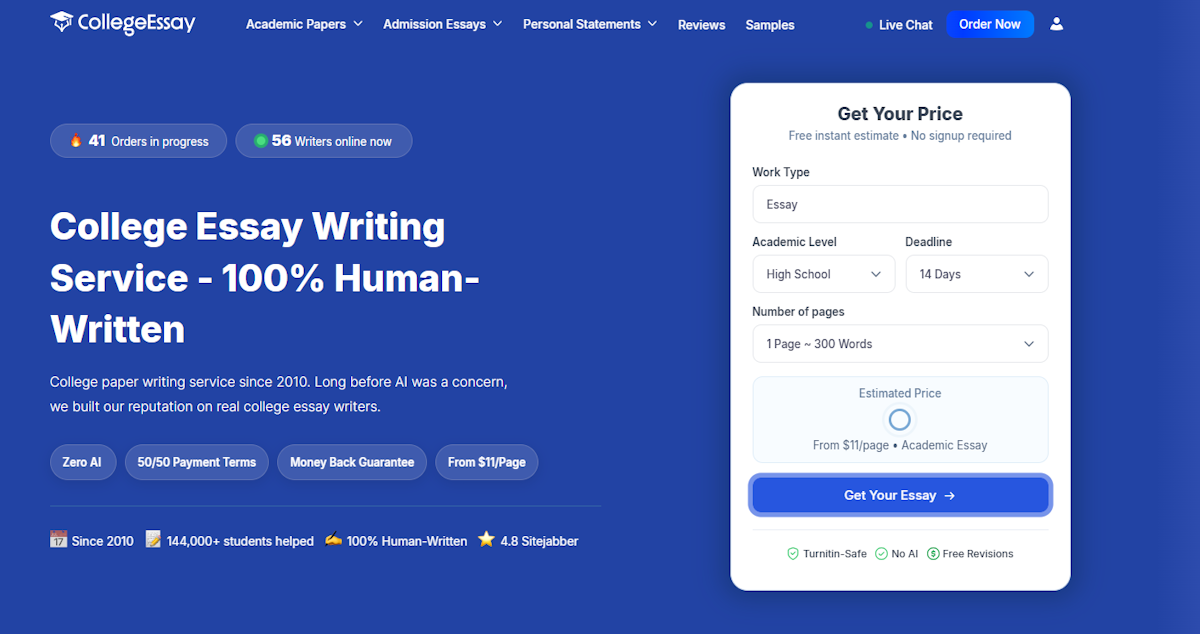
Spring semester deadlines in March 2026 bring a new layer of stress: AI detection tools. Between Turnitin's updated algorithms and GPTZero's widespread adoption, students worry their work might get flagged even when it's completely original. If you're searching for AI-proof essay writing that actually works during this critical window, you're not alone. More students are seeking AI detection pass March 2026 solutions that protect their academic standing while delivering quality work.
The good news? Strategic support from a human-written essay service like CollegeEssay.org can help you navigate this landscape ethically and effectively. This isn't about gaming the system. It's about understanding how modern detection tools work and leveraging human expertise to produce authentic, citation-ready work that stands up to scrutiny.

Understanding AI Detection Tools in March 2026
Turnitin, GPTZero, and similar platforms don't detect "writing style" in the way many students fear. According to CollegeEssay.org's detailed guide on Turnitin detection, these tools primarily flag matching text patterns, not individual voice or argument structure. Turnitin compares submitted work against its database of published content and previously submitted papers. GPTZero analyzes linguistic patterns associated with AI-generated text. Neither tool can definitively prove human authorship, but both can raise red flags when content exhibits certain statistical markers.
Turnitin safe essays share these characteristics:
- Original phrasing with proper citation of sourced ideas
- Consistent academic voice aligned with the student's known writing level
- Logical argument development with discipline-specific terminology
- Correct formatting per assignment requirements (APA, MLA, Chicago)
Students producing plagiarism-free writing under deadline pressure benefit from understanding these detection parameters. When you know what tools scan for, you can focus your energy on content quality rather than anxiety about false positives. This knowledge becomes especially valuable during spring semester deadlines when multiple high-stakes assignments converge.
Why Human-Written Content Still Matters for Academic Integrity
AI detection concerns shouldn't overshadow the core purpose of academic writing: demonstrating your learning. CollegeEssay.org emphasizes ethical support through its academic integrity policies, framing external assistance as a learning tool rather than a submission shortcut. Human-written content preserves the intellectual growth that assignments are designed to foster.
Ethical approaches to academic support include:
- Using delivered work as a reference model for structure and argument development
- Personalizing content with your unique insights, examples, and course-specific connections
- Citing all sourced material properly to maintain transparency
- Seeking help with complex formatting or citation requirements, you're still mastering
Unethical practices to avoid:
- Submitting pre-written work without significant personalization and attribution
- Using external support to bypass learning objectives or assessment requirements
- Failing to disclose assistance when institutional policy requires it
When students approach professional support with this framework, they gain valuable insights into academic writing conventions while maintaining their integrity. This balanced approach proves especially relevant during the March 2026 midterm season, when time pressure can tempt shortcuts that compromise long-term learning.
How CollegeEssay.org Ensures AI Detection Compliance
CollegeEssay.org's commitment to human-written content addresses AI detection concerns at the source. Every order receives individual attention from qualified writers who craft original work based on your specific rubric, sources, and formatting requirements. This human-first approach eliminates the linguistic patterns that detection tools flag as AI-generated.
Key features supporting detection compliance include:
- GPTZero verification reports are included with every delivered assignment
- Turnitin originality scans confirming work contains no matching text from published sources
- Subject-matter expert writers who understand discipline-specific language and argument structures
- Direct writer communication allows you to refine voice and content alignment throughout the process
For students needing research paper support during spring deadlines, CollegeEssay.org's specialized research paper service provides additional safeguards. Writers trained in academic research methodologies ensure proper source integration, citation accuracy, and argument development that reflects genuine scholarly engagement. This attention to academic convention naturally produces work that aligns with human writing patterns that detection tools recognize.
Practical Strategies for AI-Safe Essay Writing This Spring
Combining self-directed writing practices with professional support creates the strongest defense against detection concerns. Start by reviewing CollegeEssay.org's AI essay writing guide to understand detection mechanics before requesting assistance. This foundational knowledge helps you make informed decisions about when and how to seek external support.
A practical workflow for AI-proof essay writing in March 2026:
- Draft your thesis and topic sentences independently to establish your authentic argument direction
- Request targeted support for sections needing structural refinement, citation formatting, or source integration guidance
- Review delivered work as a learning model, noting how arguments develop, and evidence supports claims
- Personalize content thoroughly with your voice, course-specific examples, and unique analytical insights
- Run final drafts through your institution's detection tools before submission to verify compliance
This method ensures you remain the primary intellectual author while benefiting from expert guidance on academic conventions. During high-pressure weeks like midterm season 2026, this balanced approach reduces anxiety without sacrificing skill development or integrity.
Another practical tip: Schedule support requests early when possible. Even with rush options available, allowing adequate time for revisions and personalization strengthens both quality and detection compliance. For March 2026 deadlines, planning your support timeline alongside your assignment calendar creates a realistic path to submission without last-minute panic.
Frequently Asked Questions: AI Detection and Essay Support in Spring 2026
Can CollegeEssay.org guarantee my paper will pass Turnitin and GPTZero in March 2026?
CollegeEssay.org includes GPTZero and Turnitin reports with every order to verify human-written, original content. While no service can guarantee institutional tool results due to varying settings and databases, their human-first writing approach and verification reports provide strong evidence of compliance. Always run final drafts through your institution's specific tools before submission.
Is using a human-written essay support considered cheating during the spring semester?
It depends on your institution's policy and how you use the support. CollegeEssay.org emphasizes ethical use: delivered work serves as a learning model, not a submission-ready product. Always check your school's academic integrity guidelines. Use external support to enhance understanding of structure, argument development, and citation practices—not to replace your own effort and learning.
How do I personalize AI-safe content to reflect my authentic voice?
Add course-specific examples, connect arguments to class discussions, use terminology your professor emphasizes, and revise sentence structure to match your natural writing patterns. CollegeEssay.org encourages direct writer communication so you can refine voice alignment throughout the process. Personalization transforms reference material into authentic academic work.
What citation styles does CollegeEssay.org support for detection-compliant papers?
Writers are trained in major citation formats, including APA, MLA, Chicago, Harvard, and discipline-specific styles. When placing your order, specify your required style and any formatting guidelines from your professor. Proper citation not only meets academic standards but also strengthens originality by clearly attributing sourced ideas.
Can I request revisions if my detection reports show unexpected flags?
Yes. CollegeEssay.org includes a 14-day revision period with every order. If the initial delivery doesn't fully align with your instructions or if detection reports raise concerns, you can request adjustments. Provide clear feedback referencing your original brief and detection results to help writers refine the work to your expectations.
Conclusion: Working Smarter with Ethical, Detection-Compliant Support
Navigating AI detection concerns during spring 2026 doesn't require choosing between integrity and efficiency. AI-proof essay writing from resources like CollegeEssay.org provides the strategic support needed to submit quality work that withstands scrutiny while preserving your academic growth.
Remember: the goal isn't just to pass detection tools this semester. It's to build sustainable writing skills, strengthen your understanding of academic conventions, and protect your integrity during high-pressure periods. When you combine self-directed learning with targeted professional support framed as a learning model, you create a framework for success that extends beyond March 2026.
Always verify your institution's academic integrity policies before using external assistance. Use services like CollegeEssay.org as educational resources, not shortcuts. And most importantly, trust the process. With the right strategy and ethical support, you can navigate spring semester deadlines with confidence, knowing your work reflects both your learning and your authentic academic voice.